
Buying guide
Moka pot guide: sizes, grind and heat
Stove-top moka brewing, what maker cups mean, grind and heat control.
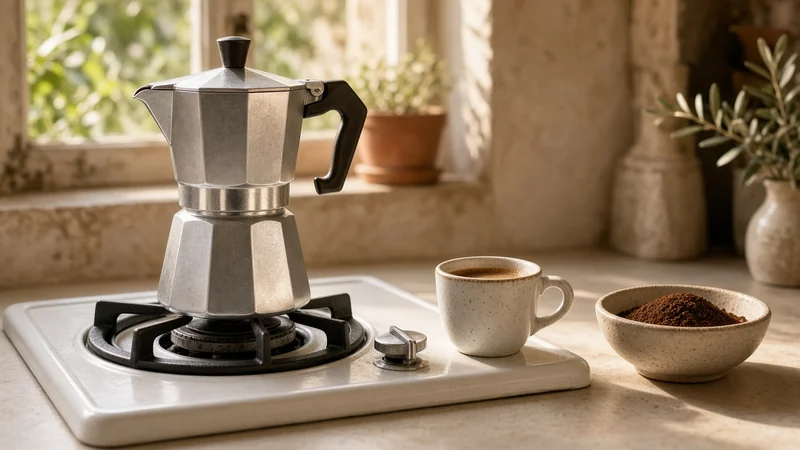
Use fine-medium grind, fill the basket level without hard tamping, heat at medium, and remove the pot as the brew turns pale. Maker “cups” are small.
- Steam pressure pushes water through coffee — stronger than drip, not espresso.
- Maker cups are small demitasse servings.
- Fine-medium grind, medium heat, pull off as brew lightens.
How stove-top pressure works
A moka pot heats water in a sealed lower chamber. Steam pressure pushes water through coffee into the upper vessel. Pressure is far below pump espresso, yet the brew is concentrated.
Fill only to the safety valve. Overfilling risks blocking the valve path. Use medium-fine grind without hard tamping — a packed funnel can choke flow.
Aluminum heats fast; stainless often handles induction when magnetic. Read the base markings.
Heat control and the sputter cue
Medium heat is enough. High heat races extraction and can spit aggressively. When flow turns pale and sputters, remove from heat.
Optional: cool the base under water to arrest extraction. Prompt removal from heat is the core habit.
Preheat water in a kettle to shorten stove time on thick stainless pots.
Gasket, plate and descaling
Replace cracked gaskets. Keep the filter plate free of oils. Descale for your water hardness; rinse thoroughly after acid descalers.
Never plug or force the safety valve. Hand-wash aluminum; dishwashers can dull soft metals.
Serving and milk
Drink as concentrate or dilute with hot water. Frothed milk lands closer to homemade cappuccino texture than café microfoam without a wand.
Camping with a stove: see Travel coffee kits: camp brewing and hand grinders. Pump espresso lives under espresso hubs.
Inspect before filling
Read the Bialetti Moka Express instructions for the actual model. Check the funnel, filter plate and gasket while the pot is cold. The gasket should sit properly, without cracks or grounds stuck on its sealing surface. A deformed funnel or damaged thread is a replacement issue, not something to overcome by tightening harder.
The safety valve must remain clear and functional. Bialetti’s valve guidance explains its role in releasing excess pressure; it is not a brewing adjustment. Never cover it, modify it or attempt to repair a pressure fault with improvised parts. If steam escapes abnormally from the joint or valve, turn off the heat and let the pot cool completely before investigating.
Fill the basket, not an arbitrary espresso dose
The funnel size establishes the intended coffee bed for the pot. Fill it loosely and level the surface without compressing the grounds. Wipe coffee from the rim before assembling. Do not make a smaller batch by leaving a large funnel mostly empty unless the manufacturer supplies a reducer or an approved method: that changes the water path through the bed.
Use the water level specified by the instructions and keep the safety-valve opening unobstructed. A moka recipe is not simply a pour-over ratio in a metal body. Start with the pot’s intended fill and a moka-appropriate grind. Espresso powder can restrict flow; a very coarse press grind can leave a weak, fast result. Use grind changes conservatively rather than tamping to slow the brew.
Match the heat source to the base
An aluminum Moka Express is not automatically compatible with an induction hob. Check the maker’s compatibility statement for your exact pot and any approved adapter. A pot that works on a gas burner and a magnetic stainless model may look similar while behaving differently on induction.
On gas, keep the flame under the base rather than climbing the sides toward the handle. Center the pot on a stable support. On an electric hob, residual heat can continue driving the brew after the power is reduced; move the pot to a suitable heat-safe resting place when the extraction finishes. Handle it by the intended grip, not the hot metal body.
Read flow without chasing crema
Observe the stream into the upper chamber while staying clear of splashing. A controlled flow is more useful than a violent, intermittent sputter. If nothing emerges when you expect it, increasing the burner aggressively can worsen a restricted-flow problem. Stop, cool and check the grind, basket and assembly rather than forcing the process.
The result is concentrated stovetop coffee, not a pump espresso shot. Judge it on its own flavor and body instead of the presence of crema. Stir the collected coffee gently before serving so the earlier and later parts of the brew mix. Dilute in the cup if it is stronger than you want; do not use excess heat to chase a larger final volume.
Troubleshoot faults at the correct point
A weak drink with an unusually quick stream can indicate a coarse grind or an incorrectly filled funnel. Bitter or burnt notes after loud sputtering point first to excessive heat and leaving the pot on too long. A leaking seam calls for cooling and inspecting the gasket and threads, not adding more coffee.
If the pot is new, follow the maker’s initial-use instructions before evaluating flavor. If an established pot develops an off taste, examine stored moisture, old oils and worn seals. Use compatible replacement parts of the right size; a visually similar gasket from another pot is not proof of a safe fit. Store the cleaned parts dry and loosely assembled rather than trapping residual moisture.
FAQ
Should I tamp coffee into a moka funnel?
No. Fill and level the funnel loosely without compressing the grounds. Bialetti’s Moka Express instructions say to fill with ground coffee without pressing it down. Wipe grounds from the sealing rim before assembling.
What should I do if steam leaks from the joint?
Turn off the heat and allow the pot to cool completely before opening it. Inspect the gasket, threads and filter assembly. Do not tighten a hot pot harder or block the safety valve to keep brewing. Replace damaged parts with compatible ones.
Will any moka pot work on an induction hob?
No. Check the manufacturer’s compatibility statement for the exact base and any approved adapter. An aluminum Moka Express is not automatically induction-compatible merely because it is a stovetop brewer.
Next step
For Moka pot guide: sizes, grind and heat, compare bands on tiers or run the matcher once.
Sources
Spec notes for Moka pot guide: sizes, grind and heat are compiled from maker docs and public references — not a hands-on review. Confirm live specs before buying.