
Buying guide
Travel coffee kits: camp brewing and hand grinders
Packable grinders, AeroPress, pour-over and stove-safe kettles.
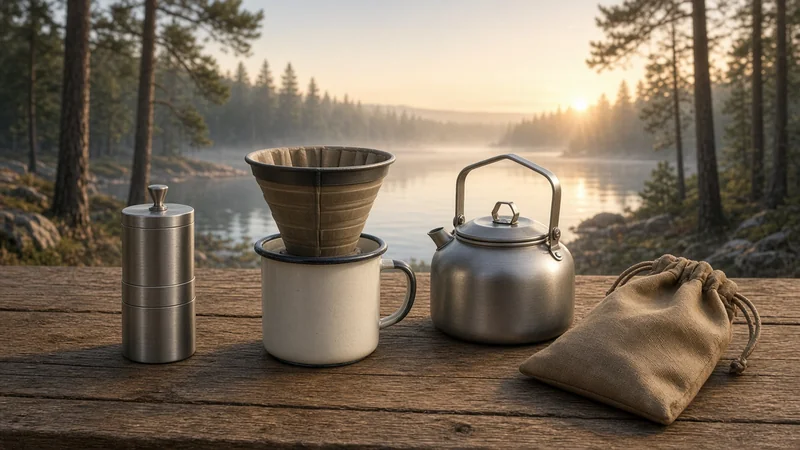
For travel, pack a hand burr grinder and AeroPress or dripper with pre-portioned beans. Keep the kit lighter than your excuses.
- Manual gear wins when power is scarce.
- Pre-dose beans in airtight bags by brew.
- Boil-safe kettles and stable surfaces matter outdoors.
Power, weight and water
Camping coffee starts with heat source reality: canister stove, campfire management or no heat beyond a thermos. Weight budgets decide between a titanium mug kit and a full moka+stove set.
Pack water you trust or filter it. Coffee will not make unsafe water safe — outdoor water treatment is separate from brew taste.
Brewers that earn pack space
AeroPress, compact drippers, moka pots and immersion presses appear most often. Siphon glass stays home.
See AeroPress guide: recipes, filters and travel use, hand grinders, and the hub milk and travel.
Grinding on the trail
Pre-grind only for short trips; aroma fades. Hand burrs keep particles even without batteries.
Blade mini-chops save weight and sacrifice cup quality.
Leave-no-trace grounds
Pack out grounds when required. Do not clog fragile pit toilets with wads of paper and coffee.
Hotel travel variant
Hotel kettles plus AeroPress cover most work trips. Capsule machines appear in some rooms — bring compatible pods only if sure of the system.
Winter and summer notes
Cold weather cools kettles fast — preheat vessels. Summer heat stales beans in hot cars; use opaque insulated storage.
Effort
Fine espresso grinds take more cranking. Filter settings are quicker. If you brew for a crowd, electric is kinder.
Specs that survive luggage
Metal bodies dent less than thin plastic. Captive adjustment rings beat loose parts. Capacity around one or two doses matches travel brewing.
Weight matters on long hikes; capacity matters for couples sharing a kit. Choose deliberately.
Dialing grind away from home
Pre-mark a filter setting that worked at home. Bring a small notepad or phone note with dose and grind.
Beans in single-dose bags beat a half-empty hopper spilling in luggage.
Care on the road
Brush burrs after oily beans. Do not wash motors or wooden handles aggressively. Dry fully before packing.
Replacement burr availability differs by brand — Baratza and other makers document parts differently for their lines.
Choose the water and heat plan first
For a hotel, confirm that a kettle is actually available rather than assuming a room coffee maker can safely heat clean water for another brewer. For camping, carry drinking water or use an approved treatment method for the source. Brewing coffee is not a substitute for water-safety planning. Follow stove and fuel rules at the destination and never run a camp burner in an enclosed sleeping area.
Choose a brewing vessel that stands securely on the available surface. A campsite table and a narrow hotel desk impose different constraints. Plastic immersion gear can be easier to pack than fragile glass, but it still needs heat-safe handling and a mug that supports it. Leave a cooling and washing plan in the kit instead of packing only the brew equipment.
Test the complete pack before leaving
Brew using only the items you intend to carry. That reveals missing filters, an awkward kettle spout, a mug that will not support the brewer or a grinder whose handle is too long for the pouch. Keep small detachable parts together and protect adjustment collars from being pressed during packing.
Write the home grinder setting down before disassembly and check how the maker restores it after cleaning. Take enough matching filters for the trip, stored dry. If the kit relies on a proprietary seal or cap, inspect it before departure. A reserve of suitable pre-ground coffee is often a more useful backup than a collection of optional brewing gadgets.
Manual grinding is a workload decision
The right travel mill depends on grip, bean dose, grind fineness and how many people are waiting. Fine espresso is a different physical task from medium filter coffee. The 1Zpresso JX-Pro maker documentation describes fine stepped adjustment; the Hario Skerton Pro page describes a ceramic-burr mill. They are not interchangeable recommendations merely because both use a handle.
If you want espresso away from home, choose an espresso-capable grinder and a complete compatible espresso brewer. Do not pair a filter-only travel mill with an open espresso basket. For a group making long drinks, consider pre-grinding shortly before departure or using a shared electric grinder where power permits. Avoid promising silence: manual burrs are quieter than motors, not literally soundless.
Decide what the destination can support
Keep a fallback that does not depend on your preferred appliance. At a hotel, an ordinary cafe may be more practical than bringing a lever machine, grinder, kettle and cleaning kit. At camp, a simple immersion brewer can serve coffee while fragile or power-hungry equipment stays home. Check the accommodation’s appliance rules and the campsite’s current fire restrictions before packing heat equipment. Do not infer that a plug adapter changes voltage. If you cannot confirm that a heater is suitable for the destination supply, leave it behind and arrange a safe hot-water source locally.
FAQ
Instant coffee?
Fine as backup; this guide focuses on fresh-ground kits.
Can I take an electric grinder camping?
Only with power plans; manuals are simpler off-grid.
Moka on camp stove?
Yes with care; watch heat and never block the valve.
Paper filters packing?
Keep dry in a zip bag inside the AeroPress tube.
Next step
For Travel coffee kits: camp brewing and hand grinders, compare bands on tiers or run the matcher once.
Spec notes for Travel coffee kits: camp brewing and hand grinders are compiled from maker docs and public references — not a hands-on review. Confirm live specs before buying.