
Buying guide
French press: sizes, materials and method
How to choose a press and brew a clean cup.
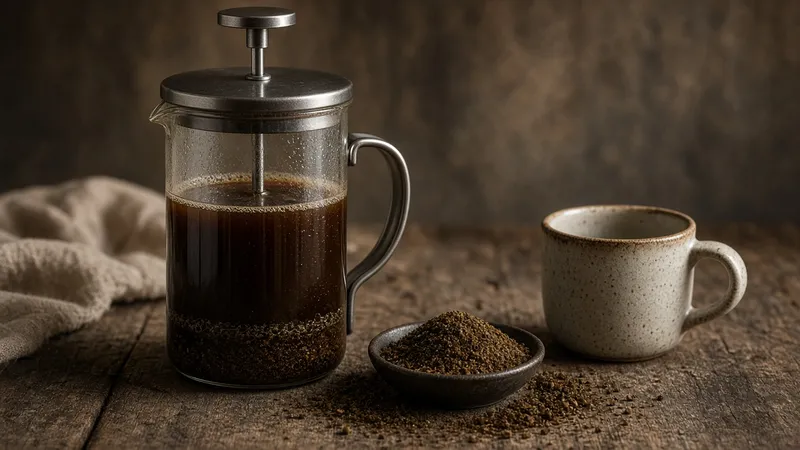
- Cup labels are not standardized mug counts; check the stated liquid volume.
- Glass, stainless and insulated presses differ in heat retention and durability.
- Coarse, even grounds reduce sludge.
Sizes
Check the actual liquid volume on the model you are buying. A maker’s cup count may refer to a small serving rather than your breakfast mug. Leave room for the grounds, surface crust and plunger instead of treating the full brim as usable brewing space.
Materials
Glass lets you see the brew but can break; stainless steel is durable; double-wall insulated presses hold heat longer.
Immersion mechanics and steep windows
French press is full-immersion brewing: grounds and water share the same vessel until a mesh plunger separates most solids. Contact time is typically measured in minutes rather than seconds, which is why a coarse grind is the usual starting point.
A widely used weekday routine is four minutes near just-off-boil water, then a slow plunge. Lighter roasts sometimes need a longer steep or a notch finer grind; darker roasts often taste cleaner with a coarser grind and prompt decanting.
Use the NCA ratio range in the step-by-step method below and adjust within a recorded recipe.
Mesh design, sediment and paper liners
Classic metal mesh passes oils and fine particles. That heavy body is the signature mouthfeel. If grit bothers you, let the sediment settle before pouring, or use a paper liner made for presses.
Oils trapped in the spiral screen go rancid. Disassemble the mesh after oily roasts and wash with hot water and mild detergent. A cloudy film on the glass usually means leftover fats, not hard-water scale alone.
Plastic travel presses trade breakable glass for packability. Heat retention differs; preheat aggressively when the carafe feels cold to the touch.
Grind cues that actually help
Visual cues help when you lack a reference card: aim for a texture closer to coarse sea salt than table salt. If the plunger fights you, the grind is too fine or the dose is too high for the basket.
Dark oily beans shed more fines in many home grinders. Coarsen a step and stir gently to break dry clumps without pulverizing particles further.
Log the grinder’s numbered setting even though numbers do not transfer across brands. See Grind size by brew method for cross-method ranges.
Batch size, heat loss and decanting
Cup markings on presses are often smaller than modern mugs. Weigh water into the carafe when you can. Underfilling a large press loses heat quickly; brew closer to capacity or preheat with hot water first.
Decant into a thermal server after plunging. Leaving coffee sitting on the bed continues extraction and pushes bitterness. That single habit fixes more “ashy French press” complaints than buying a new carafe.
For cold brew in a press, use a long cold steep and a coarse grind, then plunge and optionally paper-filter the result. Details live in Cold brew: methods and gear.
Fault matrix for immersion cups
| Cup issue | Likely cause | First change |
|---|---|---|
| Sour / thin | Under-extracted | Finer grind, longer steep, hotter water |
| Bitter / ashy | Over-extracted or sitting on grounds | Coarser grind, shorter steep, decant now |
| Muddy | Fines through mesh | Coarser grind, cleaner screen, pour carefully |
| Hard plunge | Too fine / too much coffee | Coarsen or reduce dose |
Change one variable per brew. Parallel changes hide what worked.
Where French press fits in a kit
French press rewards a decent burr grinder more than an expensive kettle. Pair it with a simple scale and you can repeat weekday cups without a gooseneck.
Households that want both immersion body and clean drip can keep a press for weekends and a thermal drip machine for busy mornings — see pour-over vs French press and brew methods.
Travel presses and camping kits are covered under milk and travel.
Assemble a repeatable first brew
The NCA French-press method starts with coarse coffee, a 1:10 to 1:16 coffee-to-water range and approximately four minutes of contact. Choose a point in that range and keep it fixed while learning. Preheat the carafe if appropriate for its material, discard the rinse and add the measured coffee and water.
The NCA sequence breaks the surface crust gently after about a minute, then allows the remaining steep before a gentle plunge. Avoid a metal spoon striking a thin glass beaker. If the plunger fights back, stop and check rather than forcing hot coffee around the lid. Transfer the brewed coffee when finished so sediment is not continually disturbed by repeated pouring.
For a shared breakfast, compare the useful volume in real mugs with the carafe’s stated capacity. Allow headroom for the crust and plunger. A smaller press is easier for a solo serving; a larger one makes sense only if you regularly use its capacity. Replacement screens and beakers can matter more to long-term ownership than the outside finish.
FAQ
Should the water be boiling?
The NCA French-press method specifies 93 ± 3°C; use a thermometer rather than assuming a fixed wait produces that temperature. Pouring a rolling boil straight in can push bitterness on some dark roasts.
Metal mesh or paper?
Mesh gives heavier body; paper cleans up sediment and some oils. Neither is wrong — pick the mouthfeel you want.
Can I brew cold brew in a French press?
Yes. Long cold steep, coarse grind, plunge, then optionally filter again. Keep the carafe refrigerated during the steep if your kitchen is warm.
How often do I replace the screen?
When the mesh warps, gaps appear at the rim, or residue will not clean. Replace gaskets when they crack or smell permanently of old oils.
Next step
For French press: sizes, materials and method, compare bands on tiers or run the matcher once.
Sources
Spec notes for French press: sizes, materials and method are compiled from maker docs and public references — not a hands-on review. Confirm live specs before buying.