Buying guide
Capsules and bean-to-cup machines: choosing a button workflow
What pods trade for convenience, and when fresh-ground gear fits better.
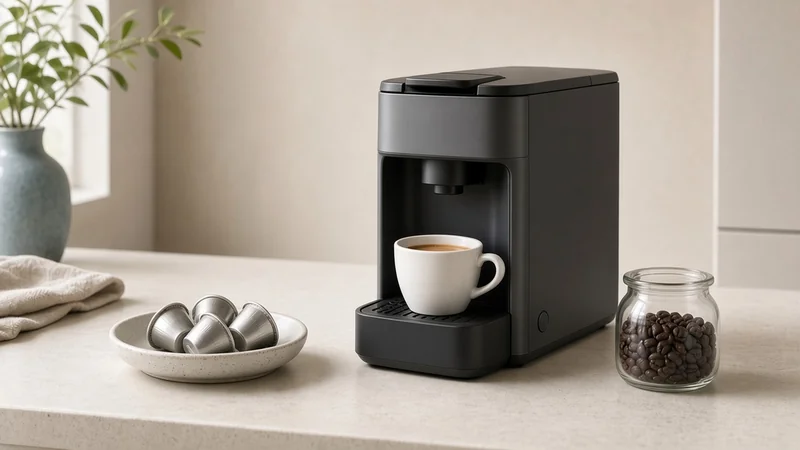
Buy capsules for push-button convenience; buy a grinder plus dripper or espresso gear when you want full control of grind, ratio and beans.
- Capsules prioritize speed and low mess over grind control.
- Ongoing cost shifts to pods.
- Great for offices; fresh-ground for dialing taste.
What capsule systems optimize
Capsule and pod machines trade grind control and bean flexibility for speed, low mess and repeatable push-button drinks. That is a valid household choice when convenience outranks dial-in.
Systems differ: some brew espresso-style short drinks; others brew larger coffee-style capsules. Cross-compatibility is limited — buy into an ecosystem deliberately.
Nespresso and similar makers publish machine instructions and recycling programs on their sites — example: Nespresso US.
Cost structure without listing prices
Ongoing capsule purchases dominate long-term spend versus beans bought in bulk. Factor taste variety you actually drink, not the starter kit alone.
Third-party capsules exist for some systems with varying fit and results. When a machine is under warranty, check the maker’s guidance on compatible pods.
Waste and recycling options vary by brand and municipality.
Milk drinks on capsule machines
Some machines include steam wands or automatic milk frothers; others need a separate frother. Texture still depends on milk type and technique.
Clean milk paths daily. Sour milk residue ruins otherwise tidy capsule workflows — see Beginner espresso: setup, dial-in and milk workflow.
When to choose beans instead
If you want origin exploration, roast-level control, or lower per-cup consumable overhead, a burr grinder plus drip/espresso path fits better.
Hybrid homes keep a capsule machine for guests and a grinder setup for enthusiasts.
Compare convenience classes in capsule vs super-automatic.
Descaling and water filters
Follow the maker’s descale alerts and approved solutions. Capsule machines still scale.
In-tank filters help taste and scale rate when the maker offers them.
Hard water households should read Water for coffee: why it matters.
Spec checklist before buying
- Drink sizes the system actually brews
- Milk solution included or separate
- Tank size and footprint
- Capsule availability where you live
- Descaling procedure you will follow
Measure the counter depth including drip tray clearance.
What super-autos automate
Super-automatics grind, dose, tamp and brew at a button press; many froth milk automatically. You trade open dial-in for convenience and a different maintenance profile.
Compare with capsules in capsule vs super-automatic when deciding convenience classes.
Bean-to-cup realities
Burrs inside super-autos vary in adjustment range. Some models struggle with very light espresso-oriented roasts. Read maker grind settings honestly.
Hoppers left full go stale — store beans properly — Coffee freshness and storage.
Milk systems
Carafes, wand attachments and fully automatic frothers each need daily cleaning. Skip days and flavors turn.
Dairy alternatives foam differently; test what your household actually drinks.
Cleaning schedules
Expect brew unit cleaning, milk system rinses and descaling. If that sounds worse than puck prep, a semi-auto may fit better.
Maker manuals (e.g., De’Longhi bean-to-cup lines) spell intervals — follow them: De’Longhi coffee.
Footprint and noise
These machines are often tall and wide. Measure cabinets. Grinders inside still make morning noise.
Compare two actual input systems
The Nespresso Vertuo Next is a Vertuo capsule machine. It cannot be turned into a whole-bean machine by adding a grinder. The De’Longhi Magnifica Evo takes whole beans and includes its grinding path. Do not buy a separate grinder merely because both appear under coffee equipment.
The capsule choice locks you to compatible formats and available coffees; the bean-to-cup choice lets you choose beans but still routes them through the machine’s internal brew unit. Neither offers the same puck preparation as an open portafilter. Read the exact milk-system description because a manual wand and a removable automatic milk carafe demand different handling.
A practical demonstration to request
Before choosing a button machine for a guest room or shared kitchen, walk through filling water, making the intended drink and disposing of the waste. Check whether the used-capsule bin or puck container can be reached without moving the machine. Look at what happens when the tray fills and how the interface communicates an empty tank or a cleaning requirement.
For milk drinks, include removing and cleaning the milk-contact parts in that demonstration. A machine is not low-effort if the beverage button is easy but the removable tubes are too awkward to wash. Decide who will perform that care during holidays and busy mornings. If nobody accepts ownership, choose a coffee-only path and a separately maintained milk option.
FAQ
Third-party pods?
Only if the maker lists them as compatible.
Can I put ground coffee in a capsule machine?
Only with adapters designed for your system, if the maker allows. Most users stick to sealed capsules.
Espresso quality versus a semi-auto?
Different category. Capsules prioritize convenience and consistency over open dial-in.
Are all pods interchangeable?
No. Stick to compatible types for your machine family.
Next step
For Capsules and bean-to-cup machines: choosing a button workflow, compare bands on tiers or run the matcher once.
Spec notes for Capsules and bean-to-cup machines: choosing a button workflow are compiled from maker docs and public references — not a hands-on review. Confirm live specs before buying.