
Explainer
Water for coffee: why it matters
Hardness, filtration and scale.
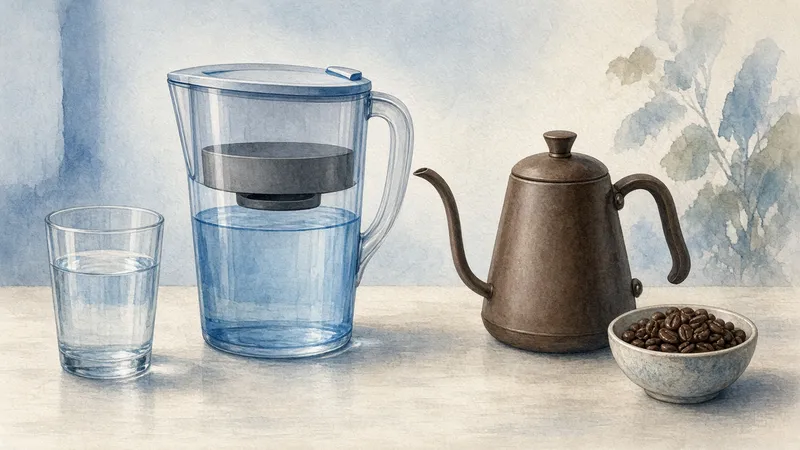
- Water is the main ingredient; taste and machine compatibility both matter.
- Very soft water can taste flat; very hard water can mute flavor and cause scale.
- Filtered tap water is a good starting point for most people.
Why water chemistry shows up in the cup
Coffee is mostly water by mass. Dissolved minerals affect extraction rate and perceived sweetness, acidity and bitterness. Chlorine and chloramine used in municipal disinfection can add medicinal notes. Machine manuals give model-specific water requirements; avoiding extreme mineral conditions is a practical starting point.
Very soft water can taste flat and extract unevenly. Very hard water can mute acidity, leave scale in kettles and machines, and push chalky flavors. Ideal home practice is clean-tasting water with moderate hardness — not distilled water alone for every brew.
If your tap water already tastes good in a glass, it is often fine for drip and press after a simple carbon filter. Problem water needs a clearer plan.
Chlorine, chloramine and simple filtration
Carbon filters reduce chlorine taste and odor for many utilities. Pitcher filters and faucet filters differ in capacity — replace cartridges on schedule or they stop helping.
Chloramine is harder to remove than chlorine; check your utility’s consumer confidence report for disinfectant type. When pitcher filters are not enough, look at maker-approved in-tank filters for drip machines or a point-of-use system designed for your water.
The EPA drinking water site explains public water reports and common treatment topics in plain language.
Hardness, scale and espresso gear
Calcium and magnesium carbonate precipitate as scale when water is heated. Thermoblocks, boilers and kettle elements lose efficiency and can fail early when scale builds.
Espresso machines are especially sensitive because narrow paths clog. Use the descaling agent the maker allows — some warranties frown on vinegar. Softening is not the same as using pure RO water; many espresso workflows remineralize filtered water to a known profile.
Track how quickly white crust appears on a kettle spout. Rapid crust means shorter descale intervals.
Practical recipes without a lab
Weekday approach: filtered tap water that tastes clean, heated to the right brew temperature, with descaling on a calendar. That beats chasing exact ppm without test gear.
Enthusiast approach: measure hardness with simple test strips, then choose a filter or bottled profile that lands near published specialty targets. Change one variable at a time when cups shift after a filter change.
Never use untreated seawater, heavily softened sodium-only water for every brew without reading how it extracts, or mystery well water with sulfur odor without testing.
Bottled water caveats
Some bottled spring waters work well; others are extremely hard or mineral-free. Read the label’s mineral content when provided. “Purified” may mean very low mineral content that tastes dull with light roasts.
Cost and plastic waste add up for households brewing liters daily. A filter system usually wins for drip volume; bottled can be a bridge while you diagnose tap issues.
Store opened bottles sealed — they pick up fridge odors.
Linking water to other guides
Ratio and grind still matter more day to day once water is in a sensible window — revisit Coffee-to-water ratios by method and Grind size by brew method.
Machine care steps live in Cleaning coffee gear: brewers, grinders and espresso care.
NCA’s how to brew pages also stress clean, suitable water as a brewing basic.
Separate safe water, taste and machine protection
These are different jobs. A filter advertised for taste is not necessarily a treatment for unsafe water, and a clean-tasting glass does not reveal all scale-forming minerals. Follow local drinking-water notices and the machine manufacturer’s water requirements before evaluating flavor. A coffee brewer is not a substitute for an approved drinking-water treatment process.
The USGS explanation of water hardness identifies dissolved calcium and magnesium as its main components. A visible kettle deposit can suggest a mineral problem, but it is not a quantitative hardness measurement. Use a suitable test or the utility report when choosing treatment for an expensive machine.
Keep a log of filter changes and the appearance of deposits. If you change from tap water to a treated supply, retaste with the same beans and recipe before adjusting grind. Do not add minerals by eye or copy an industrial treatment recipe into a small reservoir. Where the manual requires a particular filter or water range, treat that as an equipment constraint rather than a flavor preference.
FAQ
Is distilled water OK?
Straight distilled or deionized water lacks minerals that aid extraction and can taste flat. Some people blend it with mineral packets designed for coffee; follow a documented recipe rather than guessing.
Do alkalinity and hardness differ?
Yes. Hardness is mainly calcium and magnesium; alkalinity buffers acids. Both influence taste. Specialty references discuss them separately.
Will a fridge filter fix everything?
It helps chlorine and particulates for many homes. It will not magically create specialty-target mineral profiles or remove all scale-forming hardness.
How do I know my utility’s water stats?
Read the annual consumer confidence report from your water utility, usually posted online. It lists disinfectant type and hardness-related metrics in many regions.
Next step
After Water for coffee: why it matters, skim the glossary or the hub index.
Sources
Spec notes for Water for coffee: why it matters are compiled from maker docs and public references — not a hands-on review. Confirm live specs before buying.