
Buying guide
Espresso machine types and heating systems explained
Manual, semi-automatic, automatic and super-automatic, plus boiler types.
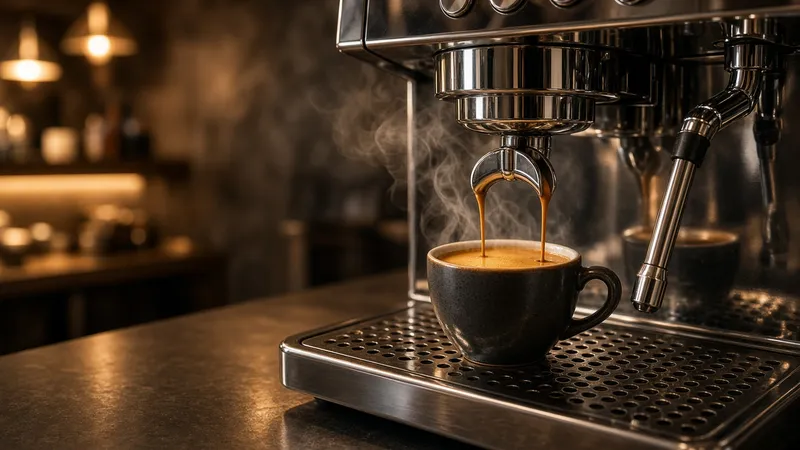
Choose machine type by the work you want to do: lever, semi-automatic, volumetric automatic, bean-to-cup or capsule. Then compare heating architecture, milk workflow, accessory fit and cleaning. A pump-pressure label alone does not tell you extraction pressure or drink quality.
- Semi-automatics let you control shot start and stop.
- Super-automatics grind, tamp and brew at the touch of a button.
- Boiler type affects whether you can brew and steam at once.
Machine types
| Type | You do | Machine does | Learning curve | Best for |
|---|---|---|---|---|
| Manual lever | Grind, tamp, lever pressure | Heat | High | Hobbyists |
| Semi-automatic | Grind, tamp, start/stop shot | Pump, heat | Medium | Most enthusiasts |
| Automatic | Grind, tamp | Stops shot at set volume | Medium | Consistency |
| Super-automatic | Press a button | Grind, tamp, brew, often milk | Low | Convenience |
| Pod / capsule | Insert pod | Everything | Very low | Simplicity |
Pump rating and extraction pressure are different specifications. For example, Breville’s Bambino page states a 15 bar pump with 9 bar extraction. Those are product claims, not measurements made by this site.
Heating systems
| System | How it works | Brew + steam at once? | Notes |
|---|---|---|---|
| Thermoblock / thermocoil | Heats water on demand | Usually no | Fast warm-up |
| Single boiler | One boiler for brew and steam | No, switch temps | Wait between |
| Heat exchanger (HX) | Steam boiler heats brew water through a tube | Yes | May need a "cooling flush" |
| Dual boiler | Separate brew and steam boilers | Yes | Precise, larger, costs more |
PID control
PID controllers keep temperature stable. Many mid-range and higher machines include one.
Specs to compare
| Spec | Why it matters |
|---|---|
| Portafilter size | Check the exact basket and portafilter size; compact machines and larger groups use different accessories |
| Pressure gauge / pre-infusion | Feedback and gentler extraction start |
| Warm-up time | Minutes to an hour on some heavy machines |
| Steam power | Speed and texture for milk drinks |
| Water reservoir vs plumbed | Convenience |
| Footprint and weight | Counter fit |
| Wattage | Circuit planning |
Check the rated load in the appliance manual before sharing a circuit with a kettle. Do not infer power consumption from machine size.
The grinder matters as much as the machine
Espresso is sensitive to grind. Small changes shift the shot time a lot. A grinder with fine steps or stepless adjustment is needed with non-pressurized baskets. See Coffee grinder buying guide: burrs, blades and method fit.
| Setup | Grinder need |
|---|---|
| Pod machine | None |
| Pressurized baskets | Fine grind helps, but forgiving |
| Non-pressurized semi-auto | Espresso-capable burr grinder |
| Super-automatic | Built in |
Worked scenarios
Scenario 1: mostly lattes, two people
A heat exchanger or dual boiler makes back-to-back milk drinks easier. A single boiler works with patience.
Scenario 2: straight espresso, one person
A single boiler with PID plus a good grinder covers this well.
Scenario 3: no time to learn
A super-automatic or pod machine trades control for convenience.
Scenario 4: small kitchen
Thermoblock machines are compact and warm up fast.
The brew matcher can help narrow the type.
Maintenance and safety
- Descale on the maker's schedule with recommended products, and use filtered or suitable water.
- Backflush machines with a three-way valve as the manual describes.
- Purge and wipe the steam wand after every use.
- Steam and hot water can burn. Keep hands clear and let the machine cool before servicing.
Portafilter size and accessories
Basket and tamper sizes differ between machine families. Match accessories to your machine.
Built-in grinders
Convenient and coupled. Evaluate grind adjustment as seriously as boiler type — Beginner espresso: setup, dial-in and milk workflow.
Milk workflow differences
Single boilers make you wait while switching from brew temp to steam temp (and back). Fine for occasional milk; slow for back-to-back lattes.
HX and dual boiler keep steam ready so you can brew and steam in one session. Dual boilers often add brew-temp precision via PID on many mid/high machines.
Temperature stability and flushing
HX machines may need a cooling flush before brewing because brew water can run hot after idle steaming. Dual boilers reduce that ritual when PID-controlled.
Home baristas learn their machine’s thermal rhythm — notes beat memory.
Size, power and counter reality
Dual boilers are heavier, draw more power and need deeper counters. Measure including portafilter clearance and drip tray removal.
Apartments with weak circuits should check amperage needs in the manual.
Maintenance implications
More boilers mean more scale surfaces. Water quality discipline rises in importance — Water for coffee: why it matters.
Gasket and valve service intervals differ; follow the specific manual, not forum lore alone.
FAQ
Is a higher pump rating better?
Not by itself. Breville distinguishes pump rating from extraction pressure on its Bambino product page. Compare the complete brew and milk workflow instead.
What is a PID?
A digital temperature controller that holds the boiler or thermoblock close to a set temperature, which makes shots more consistent.
Single boiler or dual boiler?
Single boilers brew and steam one after the other, so there's a wait between them. Heat exchangers and dual boilers can brew and steam at the same time, which helps if you make many milk drinks.
Do pressurized baskets matter?
Pressurized (dual-wall) baskets are forgiving with pre-ground coffee. Non-pressurized baskets need a fine, fresh grind but allow more control.
Next step
For Espresso machine types and heating systems explained, compare bands on tiers or run the matcher once.
Sources
Spec notes for Espresso machine types and heating systems explained are compiled from maker docs and public references — not a hands-on review. Confirm live specs before buying.